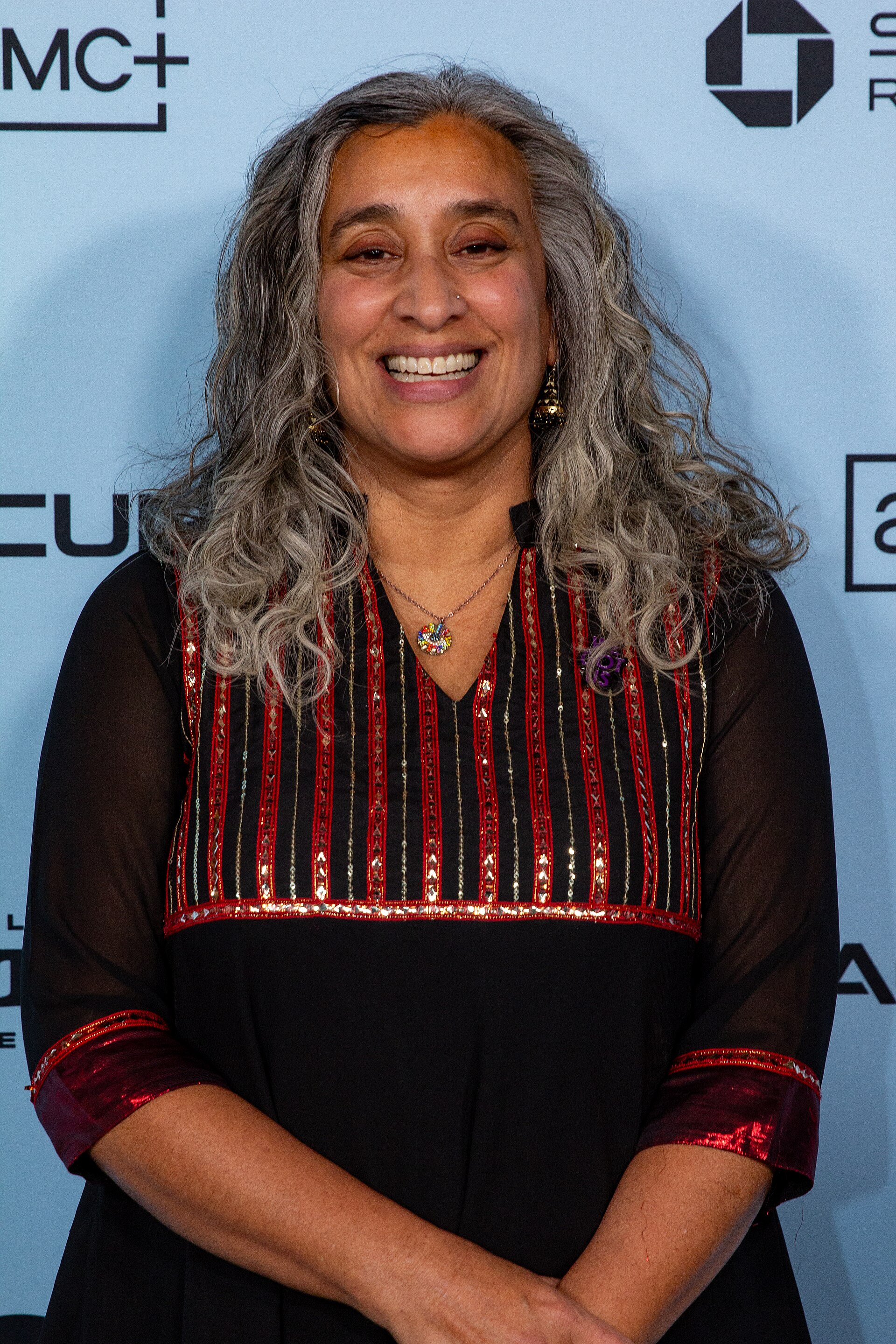
From Lara Raj to Charu Suri: the diaspora's loudest Grammy season yet
The 2026 Grammy season made it impossible to ignore. Across Best New Artist, Best Pop Duo, Best Global Music Album, Best Global Music Performance, and Best Contemporary Instrumental Album — five different categories — Indian-origin singers and musicians weren't just present. They were the conversation.

Sometime in 2026 — somewhere between Lara Raj's twin Grammy nominations and Charu Suri's raga-jazz first — the conversation about Indian diaspora singers shifted. It is no longer a sentence the music press writes once a year. It is no longer Niche. The diaspora is on stage at the Grammys, on Spotify Wrapped, on the festival circuit, and on the algorithms — and the 2026 awards season just made it impossible to write around.
This is the moment, restated in numbers.
The 2026 Grammy slate, briefly
The class of 2026 nominees with Indian-origin connection runs across five categories. The single most consequential is Lara Raj — half-Indian, half-Mexican, vocalist for the global girl group KATSEYE — nominated for Best New Artist and Best Pop Duo/Group Performance for "Gabriela". It is the kind of double-nomination that historically signals a moment, not a one-off.
Alongside her on the slate:
- Anoushka Shankar — daughter of Ravi Shankar, sitarist, British-American by citizenship — nominated for Best Global Music Album for Chapter III: We Return to Light and Best Global Music Performance for "Daybreak". Her 13 career nominations are now the second-highest among Indian-origin artists in Grammy history.
- Charu Suri — jazz pianist, Indian-American — the first raga-jazz artist to receive a nomination in Best Contemporary Instrumental Album for Shayan. Separately nominated as producer on Siddhant Bhatia's Sounds of Kumbha.
- Raja Kumari — Indian-American singer-rapper, songwriter (a previous Grammy winner in that craft) — featured artist on the same Sounds of Kumbha nomination.
- Shakti — the Zakir Hussain / John McLaughlin / Shankar Mahadevan supergroup — two nominations for Mind Explosion (50th Anniversary Tour Live). A bittersweet slate following Ustad Zakir Hussain's passing in 2024.
Five categories. Multiple wins possible. Indian acts comprise half the Best Global Music Album field in 2026 — a structural shift the Grammy organisation itself has begun to notice.
The diaspora pop pipeline, deeper than one moment
Lara Raj is the headline because Best New Artist is the headline category every year. But she is not where the diaspora pop story begins.
Norah Jones — daughter of Pandit Ravi Shankar, half-sister of Anoushka Shankar — is one of the best-selling jazz vocalists of all time. Nine Grammy wins, fifty million records sold, the kind of mid-career institution most singers spend their whole life trying to become. She has been the Indian-American answer to "where is the great diaspora pop singer?" for two decades.
Jay Sean — born Kamaljit Singh Jhooti in Hounslow, west London — was the first British-Indian artist to top the Billboard Hot 100 with "Down" in 2009. The diaspora's mainstream-pop ceiling moved that day, and it has not moved back.
Charli XCX — born Charlotte Aitchison to a Gujarati-Ugandan father and an English-Scottish mother — turned the 2024 Brat album into one of the cultural events of the post-pandemic pop decade, and reframed what mainstream British pop sounds like when the producer's reference points include both Bollywood-era melodies and Eurodance. Her acknowledgment of Indian heritage has been understated but consistent. Brat's afterlife in 2025 and 2026 — the deluxe edition, the Sweat tour, the cultural-vocabulary residue — extended the moment.
Naomi Scott — British-Indian-Ugandan, the Princess Jasmine of the 2019 Aladdin — released her debut solo single in late 2025 after years of soundtrack work, and the early reviews positioned her as the second-generation diaspora pop singer the British scene has been waiting for.
Raja Kumari — born Svetha Yallapragada Rao in California — was already a Grammy-winning songwriter (Iggy Azalea's "Change Your Life") before her own solo work landed. Her Bridges series with Indian classical and hip-hop collaborators has been a steady presence on the festival circuit through 2025 and 2026.
Vidya Vox — born Vidya Iyer — graduated from viral YouTube mashups in the late 2010s to a touring career and original EPs. Her South-Indian-classical-meets-pop synthesis is exactly the kind of work the algorithmic discovery layer of 2026 streaming rewards.
The list is long and it is getting longer.
Why now — three reasons
This is not, strictly, a moment. It is the cumulative effect of three structural shifts.
One — the second generation has aged into prime years. Most of these artists are 28–40. They are the children and grandchildren of the late-twentieth-century Indian migration to the US, the UK, Canada, Australia, and the Gulf. The diaspora's first generation worked. The second generation went to college. The third generation is on stage at the Grammys. That arithmetic was always going to land somewhere around 2025–2030.
Two — streaming changed the gatekeeping. Spotify, YouTube, and TikTok do not care that your name is unfamiliar to a 1990s A&R department. They care whether the song works on the algorithm. The diaspora's natural cross-pollination — Bollywood melodies on Western beats, Carnatic ornament on pop hooks — is exactly the kind of texture the algorithm rewards. The streaming layer abolished a gatekeeping function that had quietly held diaspora pop down for thirty years.
Three — Bollywood stopped being a ceiling. For a long time, an Indian-origin singer's path to mainstream Western recognition involved going through India first — getting big in Mumbai, then crossing over. The 2020s pipeline is different. Lara Raj is signed to Geffen via HYBE's KATSEYE project; she did not need Bollywood permission. Naomi Scott built her career on Disney soundtracks. Charli XCX has never set foot in playback. The Bollywood-first ceiling that limited the diaspora's pop ambitions in the 1990s and 2000s is no longer a ceiling.
The under-the-radar names worth tracking
The Grammy nominees get the headlines. The diaspora's medium-tail — the singers who have not yet broken through but have everything required — is where the next two years' headlines come from. Names worth listening to in 2026, in no particular order:
- Anjulie Persaud (Canadian, Indo-Caribbean) — pop and songwriting career across a decade, the long-tail diaspora's most consequential pop singer.
- Heems (Himanshu Suri, Indian-American) — Das Racist-era rapper turned solo artist, with a 2024 album that earned critical notice.
- Susheela Raman (British-Tamil) — the elder stateswoman of British-Tamil fusion, still touring, still recording.
- Raveena Aurora (Indian-American) — R&B and dream-pop, a quietly building Spotify presence.
- Sarathy Korwar (British-Indian) — jazz drummer-bandleader-vocalist, regulars on the European festival circuit, the Indian-jazz crossover's standard-bearer in the UK.
The bottom line
The diaspora is no longer "represented" in global music. It is producing global music. The 2026 Grammy slate is the formal acknowledgement of a shift that, on the ground, has been visible for at least five years.
For the diaspora reader — who has historically had to settle for Slumdog Millionaire's soundtrack and a Mira Nair score as a representational ceiling — this is the moment when the available music started to look like the available diaspora. There is no longer just one diaspora singer at any given time. There is a generation of them, across genres, across continents, with the awards-machine recognition catching up.
It is also, quietly, the moment when the diaspora can stop expecting Bollywood to be the gatekeeper of its own representation. The recognition is happening outside that ecosystem now. The next decade is going to be louder, more diffuse, and more unmistakeably the diaspora's own.
Sources: The Better India — Indian-origin artists at 2026 Grammys · Music Ally — Indian acts comprise half the Best Global Music Album nominees · India Currents — Grammy 2026 Indian talent makes some serious noise · Onmanorama — Indian artists competing at the 2026 Grammys · GRAMMY.com — Behind the explosion of Indian and South Asian music artists.
Related from Culture
Manipuri film 'Boong' becomes first Indian film to win Best Children's BAFTA

AMARA Hall of Fame Awards make their world debut at Lincoln Center

Ustad Amjad Ali Khan and sons win at the 2026 Grammy Awards