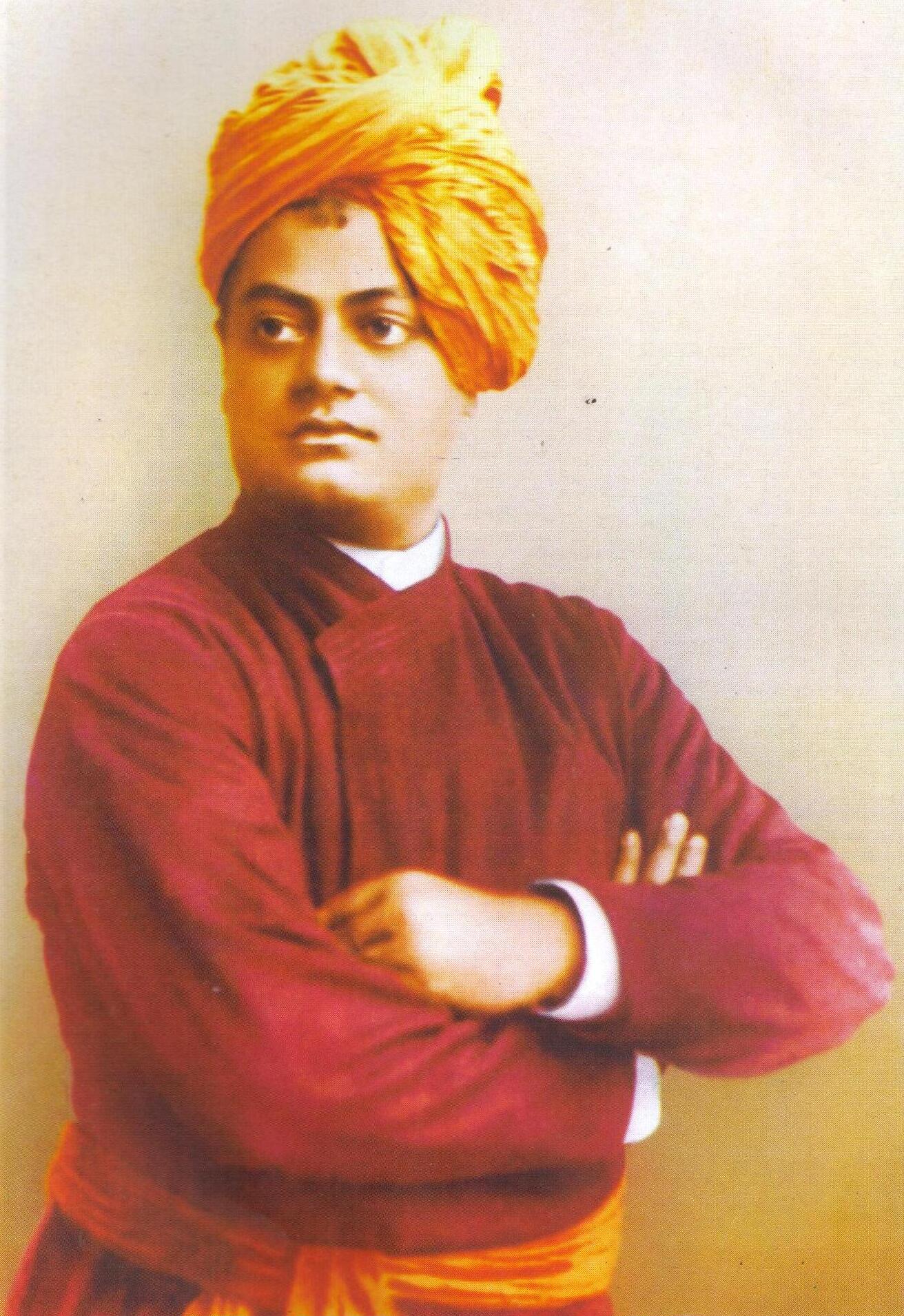
B. K. S. Iyengar: the sickly boy who taught the world to stand straight
Part 4 of The Masters Who Crossed the Ocean. A child so ill that doctors doubted he would survive grew into the man Time called one of the 100 most influential people alive — and turned his guru's discipline into the world's most-practised yoga.

The Masters Who Crossed the Ocean — Part 4 of 12.
If Krishnamacharya stayed in India and sent his students out into the world, this is the student who travelled furthest. B. K. S. Iyengar took the discipline he learned in a Mysore palace and turned it into the single most widely practised method of yoga on earth — taught in studios on every continent, in a vocabulary he largely invented. And he did it from the unlikeliest of beginnings: a boy so sick that survival, let alone greatness, seemed improbable.
The sickly boy
Bellur Krishnamachar Sundararaja Iyengar was born on 14 December 1918 in Bellur, in the Kolar district of Karnataka, during the Spanish flu pandemic that swept the world that year. His childhood was a catalogue of illness — malaria, tuberculosis, typhoid, and chronic malnutrition. "My arms were thin, my legs were spindly, and my stomach protruded in an ungainly manner," he later wrote of himself. No one looking at the frail teenager would have picked him as the future of an ancient discipline.
The guru's reluctant pupil
His life turned in 1934, when, at fifteen, his brother-in-law — the great teacher Tirumalai Krishnamacharya, the subject of the previous part of this series — invited him to Mysore. The apprenticeship was brief and brutal. Krishnamacharya was a demanding, sometimes harsh master, and Iyengar's training under him lasted, by his own account, a matter of days. Yet it was decisive. "He only taught me for about ten or fifteen days," Iyengar remembered, "but those few days determined what I have become today." By 1937, Krishnamacharya dispatched the eighteen-year-old to Pune to teach — alone, barely trained, in a city where he knew almost no one. He spent years in obscurity and poverty, practising obsessively, teaching whoever would come.
The violinist who opened the West
For nearly two decades he was unknown outside India. Then, in 1952, came the encounter that changed everything. The celebrated violinist Yehudi Menuhin, touring India, agreed — reluctantly, and for five minutes — to meet the yoga teacher in Bombay. Iyengar guided the exhausted musician into savasana, the corpse pose; Menuhin fell asleep and woke an hour later transformed. Convinced the practice sharpened his music, he invited Iyengar to Switzerland in 1954, launching the Indian's European career and, with it, the modern Western yoga movement. At the end of one visit Menuhin gave his teacher an engraved watch. It read: "To my best violin teacher, BKS Iyengar."
The revolution of the prop
What Iyengar offered the West was not mysticism but precision. After a scooter accident injured his spine, he began experimenting with props — belts, wooden blocks, ropes, chairs — to let a body hold a posture correctly and safely even if it could not yet do so unaided. It was a quiet revolution. Yoga, in his hands, became something the elderly, the injured and the disabled could practise, not just the supple young. He insisted on anatomical exactness and careful sequencing, building a whole grammar of alignment where others had taught by feel.
He was, by all accounts, a ferocious teacher. Students only half-joked that his initials, B. K. S., stood for "Bang, Kick, Slap" — a hardness inherited, perhaps, from his own guru. But the method worked, and it spread: today there are more than 1,100 Certified Iyengar Yoga teachers in the United States alone, and many thousands more worldwide, each trained in a system of his devising.
Light on Yoga
His ideas reached the world through a book. Light on Yoga, published in 1966, laid out some 200 postures in meticulous photographs and descriptions, and it became the foundational text of modern practice — translated into seventeen languages, with three million copies sold by 2005. For countless Western practitioners who knew no Sanskrit and no Hindu philosophy, it was the manual that made yoga legible. He followed it with Light on Pranayama (1981), Light on the Yoga Sutras of Patanjali (1996), and Light on Life (2005), deepening the philosophy beneath the postures.
Ramamani, and the institute
In 1975 he founded the Ramamani Iyengar Memorial Yoga Institute (RIMYI) in Pune, naming it for his wife, Ramamani, who had died in 1973 at forty-six. Theirs had been an arranged marriage in 1943, and he wrote of it with unexpected tenderness: "We lived without conflict as if our two souls were one." The Pune institute became the most prestigious training centre in the yoga world, and his children — particularly his daughter Geeta and son Prashant — became distinguished teachers in their own right, carrying the method into a second generation.
The most influential teacher
The honours accumulated late and large: the Padma Shri (1991), Padma Bhushan (2002) and Padma Vibhushan (2014), three of India's highest civilian awards. In 2004, Time named him one of the 100 most influential people in the world. He kept practising into his nineties — three hours of asana and an hour of pranayama a day, by some accounts — until his death in Pune on 20 August 2014, aged 95. The following year, on what would have been his ninety-seventh birthday, Google marked him with a Doodle across much of the world.
The anthropologist Joseph Alter judged that Iyengar "has by far had the most profound impact on the global spread of yoga." It is hard to argue. Krishnamacharya built the instrument; Iyengar carried it across the ocean and taught the world to play it — and, in the process, made a frail boy from Bellur into the most influential yoga teacher who ever lived.
Next in the series: Maharishi Mahesh Yogi, who took meditation from a Himalayan cave to the Beatles and the mainstream.
Sources: Wikipedia: B. K. S. Iyengar · Encyclopaedia Britannica · Ramamani Iyengar Memorial Yoga Institute.
Continue the series · The Masters Who Crossed the Ocean
← Previous · Part 3
Tirumalai Krishnamacharya — the father of modern yoga
Next · Part 5 (coming soon)
Maharishi Mahesh Yogi — meditation meets the mainstream
Related from Yoga & Spiritualism

Sadhguru: the mystic with a global megaphone

Tirumalai Krishnamacharya, the father of modern yoga who never left India

Paramahansa Yogananda and the autobiography that won the West