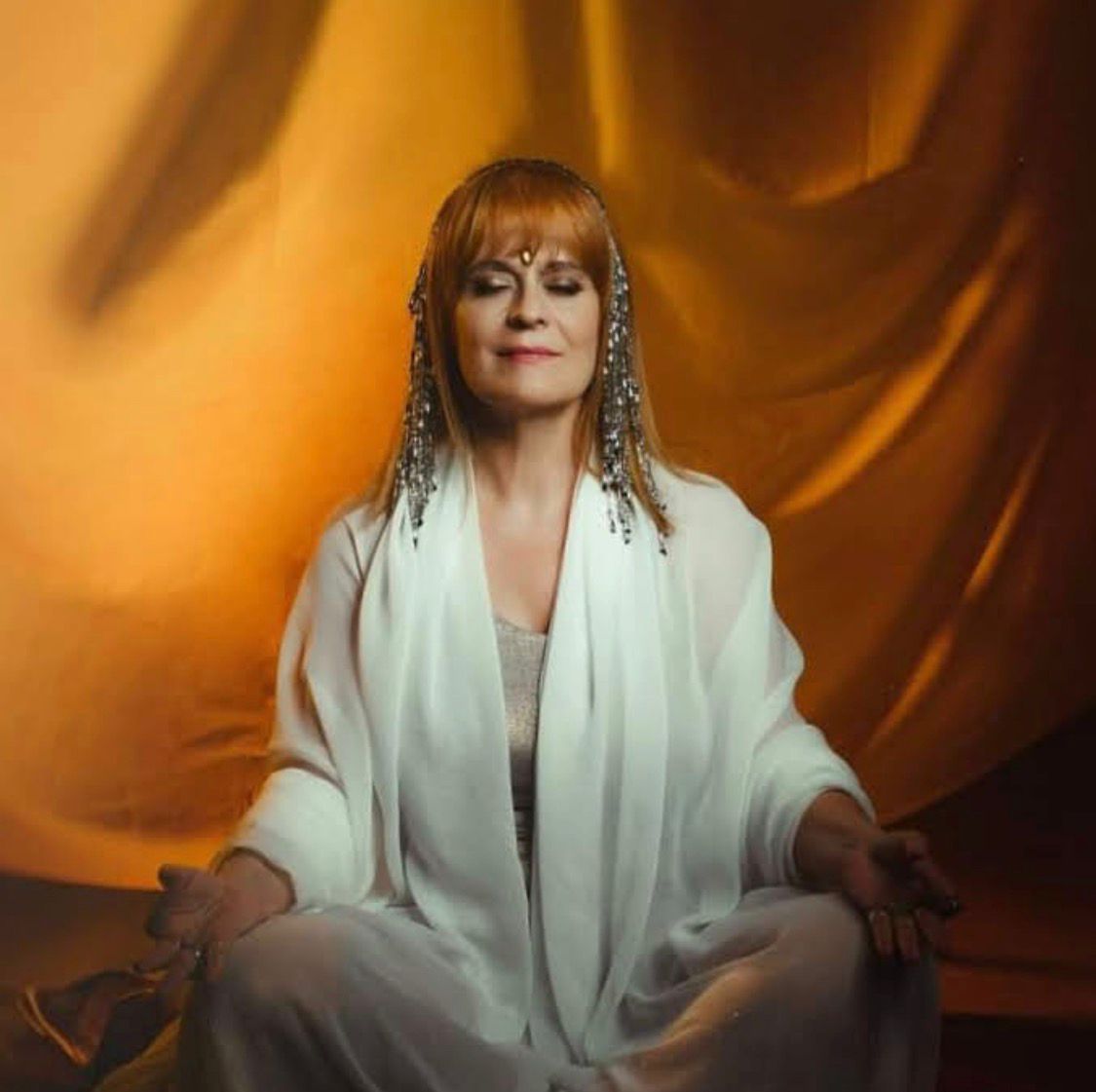
Paramahansa Yogananda and the autobiography that won the West
Part 2 of The Masters Who Crossed the Ocean. In 1920 a young monk from Gorakhpur sailed to Boston and stayed for three decades. The book he left behind, Autobiography of a Yogi, became the West's doorway into Indian spirituality.

The Masters Who Crossed the Ocean — Part 2 of 12.
If Vivekananda opened the door in 1893, Paramahansa Yogananda walked through it and stayed. He landed near Boston in the autumn of 1920 and did not go home for the better part of three decades — long enough to build Indian spirituality a permanent institution on American soil, and to write the book that carried it to millions of people who would never meet a guru in person.
Mukunda
He was born Mukunda Lal Ghosh on 5 January 1893 in Gorakhpur, in northern India, into a prosperous Bengali Kayastha family; his father was a vice-president of the Bengal-Nagpur Railway. By his own much-repeated account he was a God-intoxicated child who sought out saints across Bengal. The search ended in 1910, when, at seventeen, he met Swami Sri Yukteswar Giri, the teacher who would train him for the next decade.
He was not, however, a runaway mystic. He passed his Intermediate examination at Scottish Church College in Calcutta and took a Bachelor of Arts from Serampore College, and in July 1915, weeks after graduating, he took formal vows in the monastic Swami order — Yukteswar letting him choose his own name: Yogananda, "bliss through divine union." Two years later, in 1917, he founded a school for boys — first at Dihika in Bengal, then from 1918 at Ranchi — that fused modern schooling with yoga and meditation. It survives today as the Yogoda Satsanga Society of India.
The City of Sparta
Yukteswar's lineage ran back through Lahiri Mahasaya to the near-legendary Mahavatar Babaji, and its meditation technique, Kriya Yoga, was the inheritance Yogananda would carry abroad. The chance came in 1920, when the American Unitarian Association invited him as India's delegate to an International Congress of Religious Liberals in Boston. In August 1920 he sailed aboard the City of Sparta, a two-month crossing that put him ashore near Boston in late September. He spoke at the Congress that October, was well received — and, instead of returning, founded the Self-Realization Fellowship to carry his teaching worldwide.
Where earlier monks had lectured and left, Yogananda built. After years of touring he launched a cross-continental speaking tour in 1924 that drew thousands to single lectures, and in 1925 he established the Fellowship's international headquarters in Los Angeles, on the Mount Washington estate that remains its centre today.
An Indian saint in Jazz-Age America
For a country that had met almost no Indian gurus in the flesh, Yogananda was a revelation — a serene, long-haired monk who spoke fluent English, quoted the Bible alongside the Gita, and taught a method rather than a creed. He moved easily among the era's famous. He so admired the horticulturist Luther Burbank that he dedicated Autobiography of a Yogi "to the memory of Luther Burbank, an American saint." And in 1927 he became the first prominent Indian to be received at the White House, by President Calvin Coolidge.
His one long return home, in 1935–36, gathered the threads of his life. Sri Yukteswar conferred on him the title Paramahansa — "supreme swan," a mark of the highest realisation. He sought out other masters, among them the woman-saint Anandamayi Ma, who appears later in this series, and he met Mahatma Gandhi at Wardha, where, by his own account, he initiated Gandhi into Kriya Yoga. Soon after he returned to Calcutta in 1936, Yukteswar died.
A method, not a creed
Part of Yogananda's appeal was that he offered a technique rather than a dogma. He presented Kriya Yoga — the meditation and breath discipline of his lineage — not as an exotic faith to be adopted but as a precise, "scientific" method of inner experience, open to Christian and Hindu alike. That framing landed perfectly in a West that was curious about the spiritual but wary of conversion, and it let him insist, as he often did, that he had not come to start a new sect but to help people of every religion know God directly.
It also travelled. Through the Self-Realization Fellowship he organised the teaching into a structured order with a graded series of lessons, so that a seeker in a small American town who would never reach an ashram could still receive instruction by post. That combination — a method, an institution, and finally a book — is what allowed his work to outlast him and keep growing after 1952, with Self-Realization Fellowship centres and meditation groups now spread across dozens of countries.
The book
His enduring monument is a book. Autobiography of a Yogi, published in 1946, told the story of his search, his guru, and the saints and wonders he had met — and it did what no lecture could: it reached readers who would never enter a meditation hall. It has since sold well over four million copies, been translated into dozens of languages, and been named among the hundred most important spiritual books of the twentieth century.
Its afterlife is its own argument. Among countless readers, Steve Jobs first read it as a teenager, read it again on his journey through India, and kept it on his iPad; he is reported to have ordered five hundred copies so that every guest at his memorial could be given one. For an enormous number of Western seekers across the decades, this was the first — and sometimes the only — book of Indian spirituality they ever opened.
A deliberate exit
Yogananda died in Los Angeles on 7 March 1952, at a banquet at the Biltmore Hotel for the visiting Indian ambassador, Binay Ranjan Sen. He had just finished speaking — of India and America — when, a disciple recorded, "he lifted his eyes… and his body slumped to the floor." The medical verdict was a heart attack; his followers call it mahasamadhi, a yogi's conscious departure from the body. One curious footnote kept the story alive in the American press: the director of the Forest Lawn mortuary, Harry T. Rowe, stated in a notarised letter that "no physical disintegration was visible in his body even twenty days after death" — a claim his organisation has cited ever since, and which sceptics have long questioned.
He had spent more than half his life on foreign soil. In doing so he changed the terms of the exchange that Vivekananda had begun: India's spiritual tradition was no longer something the West travelled to visit, but something that now lived among it — in an institution on a Los Angeles hilltop, and in a book that has never gone out of print.
Next in the series: Tirumalai Krishnamacharya, the Mysore teacher whose students became the world's yoga.
Sources: Encyclopaedia Britannica · Wikipedia: Paramahansa Yogananda · Self-Realization Fellowship.
Continue the series · The Masters Who Crossed the Ocean
← Previous · Part 1
Swami Vivekananda — the sentence that opened the West
Next · Part 3 (coming soon)
Tirumalai Krishnamacharya — the father of modern yoga
Related from Yoga & Spiritualism

Tirumalai Krishnamacharya, the father of modern yoga who never left India
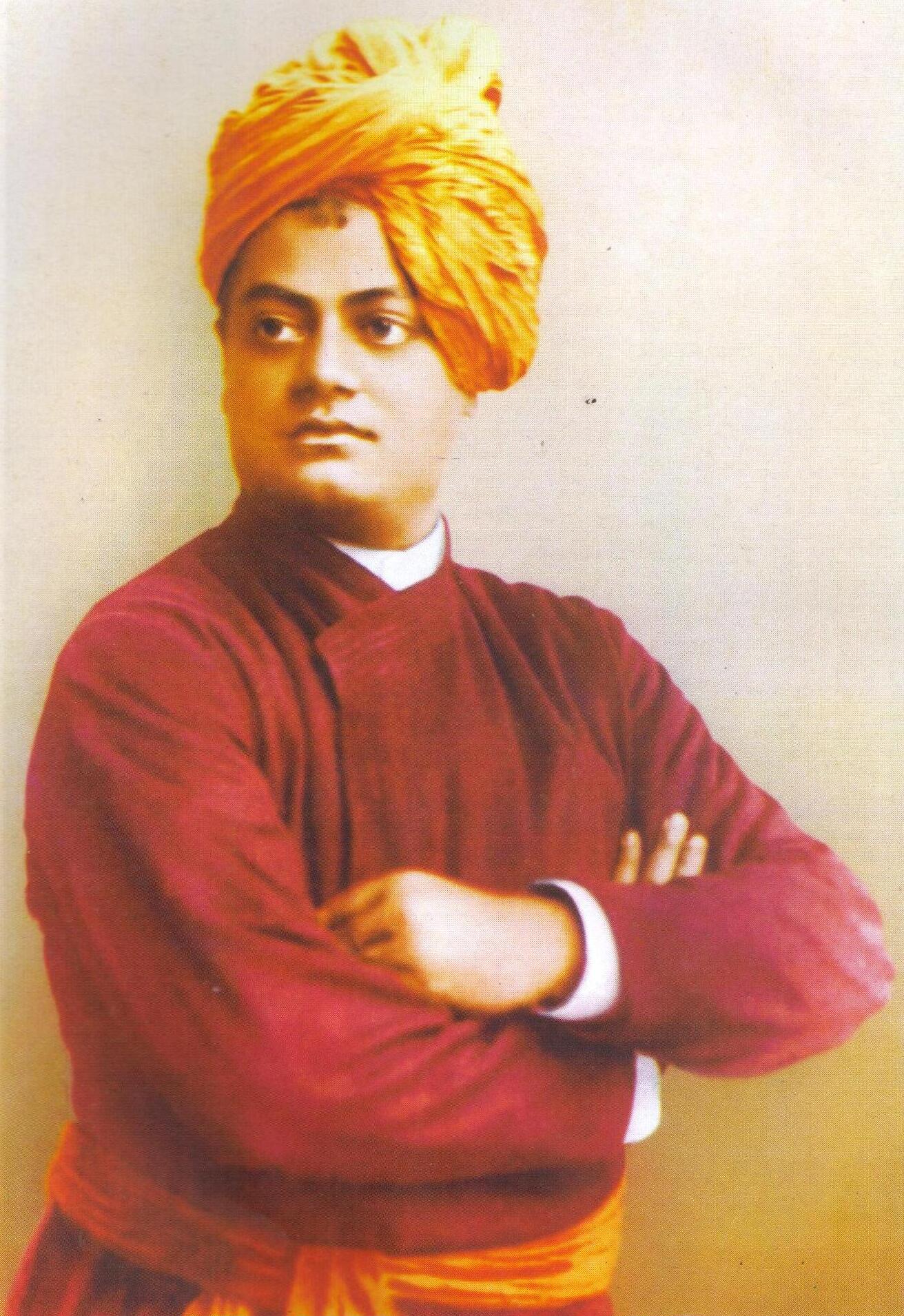
Swami Vivekananda and the sentence that opened the West

Yoga for Healthy Ageing: diaspora marks Yoga Day 2026 from the Lincoln Memorial to Times Square