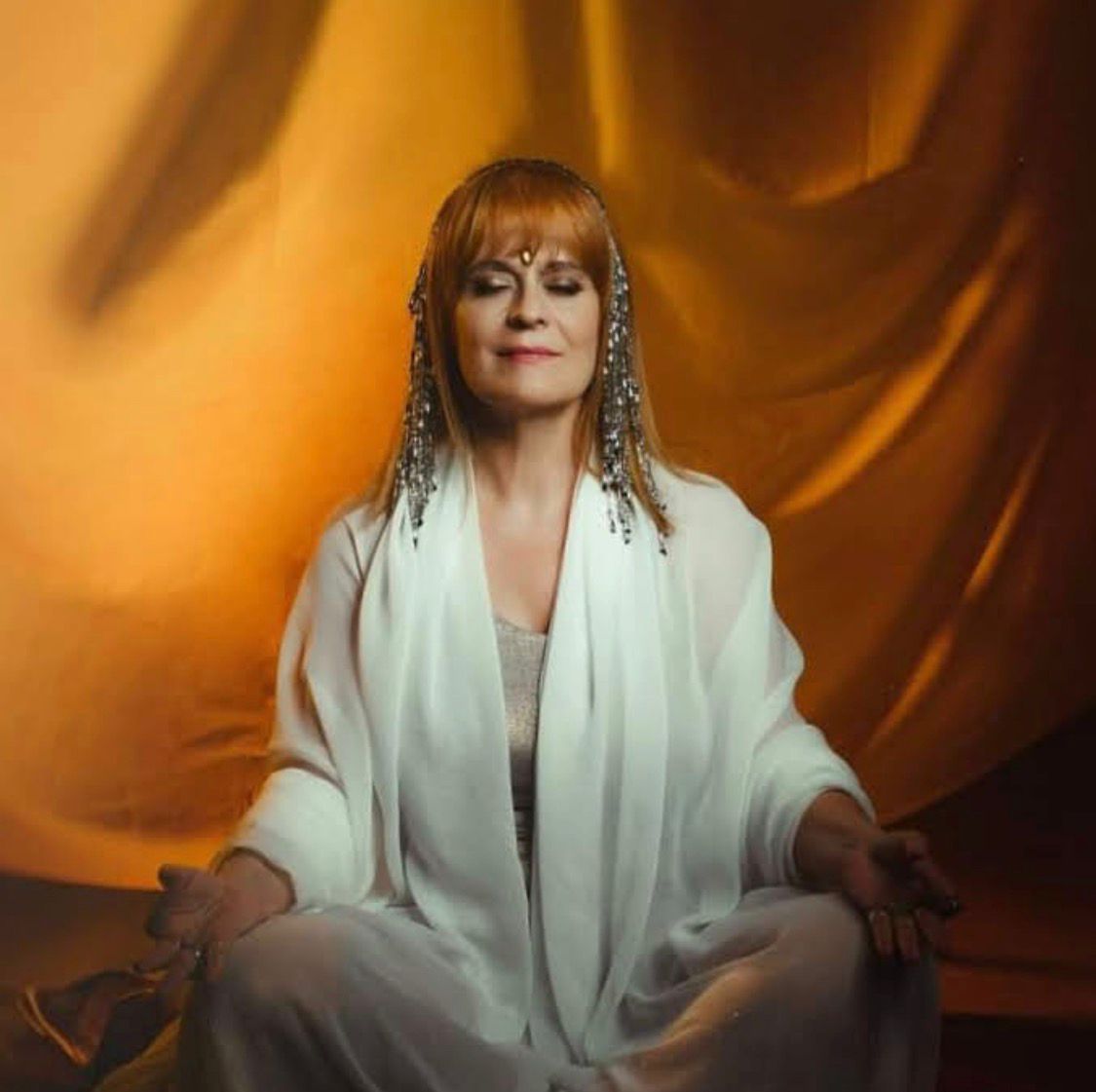
Tirumalai Krishnamacharya, the father of modern yoga who never left India
Part 3 of The Masters Who Crossed the Ocean. He never sailed anywhere — yet the yoga practised in studios worldwide descends almost entirely from one intense Mysore Brahmin and the handful of students he sent out into the world.

The Masters Who Crossed the Ocean — Part 3 of 12.
This is the one master in the series who never crossed the ocean. Tirumalai Krishnamacharya spent essentially his entire hundred-year life inside India and, as far as the record shows, never travelled abroad. And yet, more than any other single figure, he is the source of the physical yoga now practised in studios from London to Los Angeles. The ocean was crossed not by the man but by his students — and almost every famous strand of modern yoga runs back to his room in a Mysore palace.
The scholar
He was born Tirumalai Krishnamacharya on 18 November 1888 in the village of Muchukundapura, in the Chitradurga district of present-day Karnataka, into an orthodox South Indian Brahmin family of Sri Vaishnava scholars; his father was a teacher of the Vedas. [Wikipedia] He would die, remarkably, on 28 February 1989 in Madras (now Chennai), at the age of 100 — a span that itself became an advertisement for the discipline he taught.
His training was not, at first, in postures at all. It was scholarly, and exhaustive. He spent his youth travelling across India to study the six darśanas, the classical schools of Indian philosophy, and in 1906, aged eighteen, enrolled at Banaras to study logic and Sanskrit. He later took up Ayurvedic medicine, the system of healing whose principles would shape his entire approach to yoga. By temperament and training he was a learned orthodox pandit — a man of texts and rituals — long before he became the world's most influential yoga teacher.
The Himalayan guru
The hinge of his life story is a journey to the mountains. By his own account, Krishnamacharya travelled to a remote school near Lake Manasarovar, beneath Mount Kailash in Tibet, and spent some seven and a half years studying under a yoga master named Ramamohana Brahmachari — learning āsana and prāṇāyāma, absorbing the Yoga Sutras of Patanjali, and committing to memory a text called the Yoga Korunta that he said was the basis of his sequences.
It is worth being candid here, in the spirit of journalism rather than hagiography: much of this rests on Krishnamacharya's own telling. Yoga historians, including Mark Singleton, have noted that he "provided contradictory descriptions of the facts of his own life," and the Yoga Korunta itself has never been independently produced. What is not in doubt is the result: he returned to the south with an extraordinary command of postures, breath and therapeutic technique that he would spend the rest of his life systematising and teaching.
Mysore
His stage was a palace. Around 1926 the Maharaja of Mysore, Krishna Raja Wadiyar IV — a reform-minded prince and enthusiast of physical culture — met Krishnamacharya and was impressed enough to install him as a teacher to the royal family, eventually granting him the title of palace scholar. In 1933 the Maharaja gave him a wing of the Jaganmohan Palace to run as a yogaśālā, a yoga school that opened formally that August.
To fill it — and to win over a public that had largely forgotten āsana practice — Krishnamacharya became a showman as well as a teacher. He staged public demonstrations of startling feats: holding difficult postures for long stretches, and reportedly suspending his own pulse, stopping a car with his bare hands, and lifting weights with his teeth. The exact authenticity of the more spectacular claims is debated, but the effect was real: yoga, long associated with wandering ascetics, was reframed as a vigorous, visible, respectable discipline. It was in these Mysore years that he developed the innovation most associated with his name — vinyāsa, the systematic linking of breath to movement — and in 1934 he published Yoga Makaranda, setting his method down in print.
The students who crossed the ocean
Krishnamacharya's true export was people. The pupils who passed through his Mysore school became, between them, the architects of global yoga:
- B. K. S. Iyengar (1918–2014), his brother-in-law, who built Iyengar Yoga around precise alignment and the therapeutic use of props, and whose Light on Yoga became a worldwide standard. Their relationship was famously hard — the young Iyengar later spoke of being severely treated by his guru — but the debt was foundational.
- K. Pattabhi Jois (1915–2009), who systematised the fast, flowing Ashtanga Vinyasa method now taught in studios everywhere.
- Indra Devi (1899–2002), the Russian-born student who carried yoga to Hollywood and helped make it fashionable in the West.
- T. K. V. Desikachar (1938–2016), his own son, who founded the Krishnamacharya Yoga Mandiram in Chennai and developed the gentle, individualised approach known as Viniyoga.
Iyengar, Jois and Indra Devi are each, in their own right, part of the larger story this series tells — Indians and their pupils carrying the tradition outward. But all three, and the millions who practise in their lineages, trace back to the same teacher who never boarded a ship.
Madras, and the turn to healing
In 1952, at the age of sixty, with India newly independent and royal patronage gone, Krishnamacharya moved to Madras and began the longest and in some ways most influential phase of his career. Teaching ordinary people — the old, the sick, the stiff — rather than supple palace boys forced a profound change in his method. Out went the one-size-fits-all sequence; in came a principle he repeated for the rest of his life: teach what is appropriate for the individual.
Drawing on his Ayurvedic training, he adapted postures, breathing and even diet to each student's age, body and ailment, and in doing so effectively founded modern yoga therapy — the idea that āsana and prāṇāyāma could be prescribed, like medicine, for healing rather than performance. He kept teaching, and writing, almost to the end, publishing the text Yogavalli in 1988, the year before his death.
A source, not a traveller
The paradox is the point. A man who never left India shaped the daily practice of tens of millions of people who will never visit it. As Yoga Journal once put it, whether your yoga descends from Jois's dynamism, Iyengar's precision, Indra Devi's accessibility or Desikachar's gentleness, "your practice stems from one source: a five-foot, two-inch Brahmin born more than one hundred years ago in a small South Indian village."
Vivekananda and Yogananda crossed the ocean themselves. Krishnamacharya did something stranger and, arguably, more durable: he stayed home, perfected the instrument, and handed it to the people who would carry it everywhere.
Next in the series: B. K. S. Iyengar, the student who turned his guru's discipline into a worldwide method.
Sources: Wikipedia: Tirumalai Krishnamacharya · Krishnamacharya Yoga Mandiram · Yoga Journal.
Related from Yoga & Spiritualism

Paramahansa Yogananda and the autobiography that won the West
Swami Vivekananda and the sentence that opened the West

Yoga for Healthy Ageing: diaspora marks Yoga Day 2026 from the Lincoln Memorial to Times Square